Ohio's Adult-Use Launch, Two Years In: What Actually Changed
It has now been roughly 20 months since adult-use cannabis retail went live in Ohio. For Butler County and Monroe consumers, that is long enough to look back and ask: what actually changed? Here is the practical 2026 accounting.
The Operational Rollout
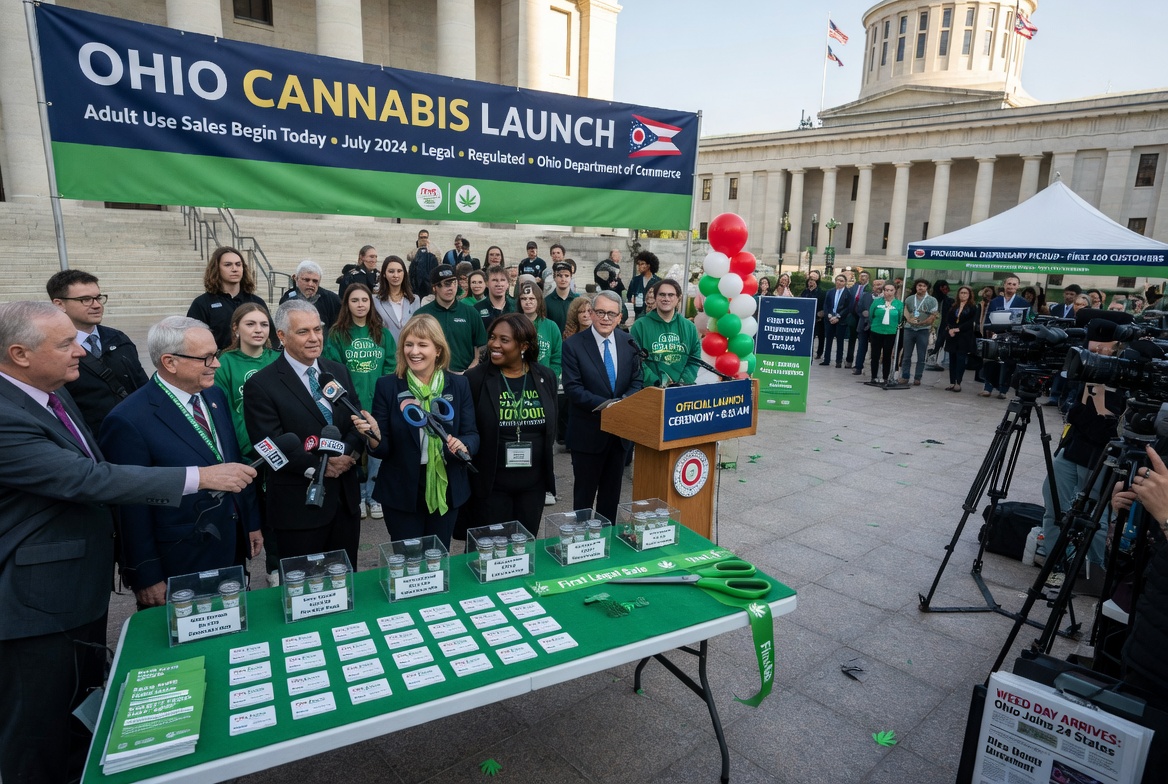
Adult-use sales launched in Ohio in August 2024, using the pre-existing medical dispensary footprint as a starting point. The first adult-use day saw queues at many shops, inventory pressure on several product categories (particularly flower and vape cartridges), and a broadly-smooth compliance rollout that had clearly been rehearsed by the medical-era operators. The rollout was faster than many observers expected — Ohio went from Issue 2 passage (November 2023) to retail launch (August 2024) in under 10 months, compared to multi-year gaps in New York and some other adult-use states.
Dispensary Footprint Growth
The medical-era Ohio footprint was approximately 60 dispensaries. Since adult-use launch, the DCC has licensed additional dispensaries to address geographic coverage gaps and accommodate adult-use demand. Butler County specifically added capacity — Shangri-La Monroe Superstore at Brooks Drive is among the post-2024 operators that expanded the county's retail map.
Price Movement
Ohio medical pricing pre-2024 was widely considered high relative to mature states. Post-launch, adult-use competition and supply expansion have put meaningful downward pressure on retail prices. Flower eighths that ran $60+ in the late medical era are commonly $30-$45 in 2026. Vape cartridges and edibles have seen similar moderation. For consumers, the 2026 price environment is substantially better than the pre-launch baseline — though Ohio prices remain higher on average than Michigan or Oregon.
Product Variety
Medical-era Ohio had a narrower product catalog than California or Colorado, partly because of the smaller patient population and partly because of specific compliance rules. Post-adult-use, the catalog has broadened substantially: more brands, more flower strains, more concentrate formats, more edibles SKUs, more accessories. The 2026 Ohio menu is much closer to California-mature than to the 2021-era medical scene.
Tax Revenue
Ohio's 10% adult-use excise tax has generated substantial state revenue, with funds directed per Issue 2 to DCC operations, social equity, education, and host-community funds. The host-community fund — money flowing to municipalities that host licensed dispensaries — is a meaningful local revenue stream for places like Monroe, Hamilton, and Middletown. The exact allocation has been the subject of continued legislative discussion, but dispensary-host communities in Butler County have received meaningful distributions.
Who's Actually Shopping
The Ohio adult-use consumer base in 2026 is broader than the medical-era patient base. The most common adult-use shopper profiles: (1) Former medical patients who now shop adult-use for convenience, (2) Previously-illicit-market consumers who switched to licensed retail for quality and safety, (3) Out-of-state visitors from Kentucky, Indiana, and Tennessee, (4) First-time cannabis consumers who waited for a fully-legal option, (5) Occasional consumers who no longer want to navigate unregulated sources.
The Edibles Growth
Edibles have been the standout category in Ohio's adult-use era. The medical-era edibles scene was narrow; adult-use regulations, combined with the rise of precision-dosing brands, created conditions for rapid edibles growth. Gummies, chocolates, and beverages have been the three fastest-growing subcategories. For Monroe consumers, the 2026 edibles menu at Shangri-La Monroe represents a category that simply did not exist in the same form in 2023.
What Has Not Changed
A few things remain as they were in the medical era: (1) No credit cards accepted at Ohio dispensaries — federal banking compliance still applies. (2) ID check at every visit, every purchase — a compliance requirement, not discretion. (3) No on-site consumption — you buy and leave. (4) State-line crossing with cannabis remains federally illegal. (5) Employer drug-testing rules have not been overridden by legalization.
The Legal Evolution
Because Issue 2 was a statutory initiative, the Ohio General Assembly has revisited specific provisions in the post-passage period. Changes have focused on tax allocation, licensing mechanics, public-consumption rules, and the relationship between the host-community fund and general revenue. The core consumer-facing framework (21+, 2.5 oz, 6 plants per adult, licensed retail) has remained stable through those changes.
Butler County Specifically
For Butler County, the 2024-2026 period has transformed cannabis from a niche medical-patient service to a mainstream consumer retail category. Monroe's Brooks Drive, West Chester's I-75 commercial cluster, Hamilton's retail district, and Middletown all now have dispensary presence that serves the county's 400,000 residents plus the I-75 commuter flow. The county has gone from cannabis-adjacent to cannabis-mature in under two years.
What Happens Next
The 2026-2028 Ohio cannabis outlook is more about refinement than transformation. The framework is in place; the consumer base is established; pricing is disciplining through competition; DCC regulation is operational. Future changes will likely focus on: (1) expanded delivery rules, (2) tax allocation adjustments, (3) equity program evolution, (4) potential product-category expansions, (5) ongoing tension over local-authority questions (whether municipalities can ban dispensaries, restrict consumption, etc.).
Summary
Ohio's adult-use program at 20 months is functioning, maturing, and delivering on most of Issue 2's practical promises. Prices have moderated, product variety has broadened, dispensary access has expanded, tax revenue has flowed. For Monroe and Butler County consumers, the post-2024 era has made cannabis shopping normal, safe, and convenient — a meaningful contrast with the medical-only era of 2019-2023.